Read the graphic’s message as text
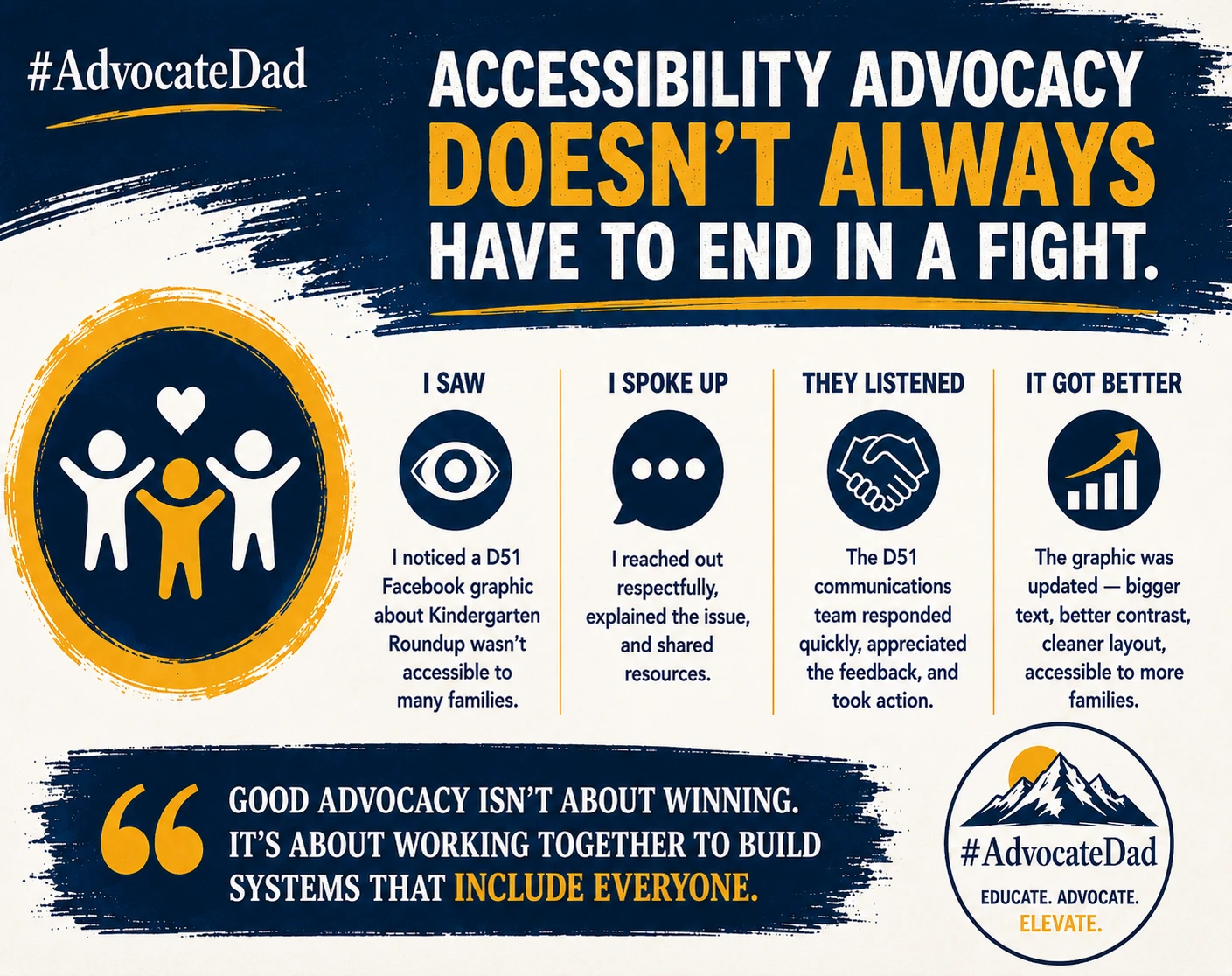
#AdvocateDad. Accessibility advocacy does not always have to end in a fight. I saw: I noticed a D51 Facebook graphic about Kindergarten Roundup was not accessible to many families. I spoke up: I reached out respectfully, explained the issue, and shared resources. They listened: The D51 communications team responded quickly, appreciated the feedback, and took action. It got better: The graphic was updated—bigger text, better contrast, cleaner layout, accessible to more families. Good advocacy is not about winning. It is about working together to build systems that include everyone. Educate. Advocate. Elevate.
Accessibility advocacy doesn’t always have to end in a fight.
Sometimes, you point out a problem. Someone listens. And the system gets a little better.
Recently, I noticed an accessibility issue with graphics being shared by Mesa County Valley School District 51. The font being used for staff names was difficult to read, particularly for people with low vision, and could create unnecessary barriers for people using assistive technology.
So I reached out. Not to attack the communications team. Not to embarrass anyone. Not to “win.”
I explained the accessibility concern, why it mattered, and asked whether they would consider making a change.
They did. The D51 communications team responded quickly, listened to the concern, and adjusted the design. The updated graphics use much clearer, easier-to-read text.
Is it perfect? Maybe not. Is it better? Absolutely. And that matters.
This is something I think we sometimes lose sight of in advocacy: The goal isn’t to catch people doing something wrong. The goal is to help systems do something better.
Accessibility barriers are often created by people who never intended to exclude anyone. Sometimes they simply haven’t been shown the barrier yet.
That’s where advocacy can be incredibly powerful. Identify the barrier. Explain the impact. Offer a solution. Give people an opportunity to respond. And when they do the right thing—recognize it.
Thank you to the D51 communications team for listening and making the change.
Accessibility is not about perfection. It’s about continuing to notice who might be left out—and being willing to do something about it.
That is how we build more accessible communities.