From Western Colorado to Washington

The D.C. mission

Rob and Isabelle Harris brought Western Colorado’s lived experience with blindness, special education, transition, and rural access to a focused federal agenda.

After Washington · Updated October 27, 2026

What happened. What’s next.

The trip brought lived experience into federal education advocacy and gave us practical resources to share back home. The public record below documents participation, access, and coverage. It does not establish that Congress has adopted our requests.

What happened

What’s next

The two Congressional asks remain the focus of this page. Legislative action, funding decisions, and implementation must be documented separately from meetings and media coverage. We will link to the public evidence when reporting a policy result.

How to help now

  1. Use the resources. Share the NLS guide and Project INSPIRE materials with families and education teams. Connect a resource to a goal the learner chooses.
  2. Bring an implementation example. Describe the access needed, the barrier, and the practical change that would help. Contact Rob about collaboration; leave private student, medical, and case records out of initial messages.
  3. Carry the public asks forward. Use the two-ask briefing below in conversations with elected officials and community partners. Ask how the proposed action would support specialized instruction and access in practice.

Explore the advocacy albums

Receive advocacy updates

Moments from Washington

The D.C. mission in photos

Twenty highlights from our time in Washington: advocacy, connection, and access in practice.

Explore all 20 photos in the accessible album →

Watch the accessible slideshow on YouTube

Includes narrated photo descriptions and visible captions.

Explore Advocacy Through the Years — all albums

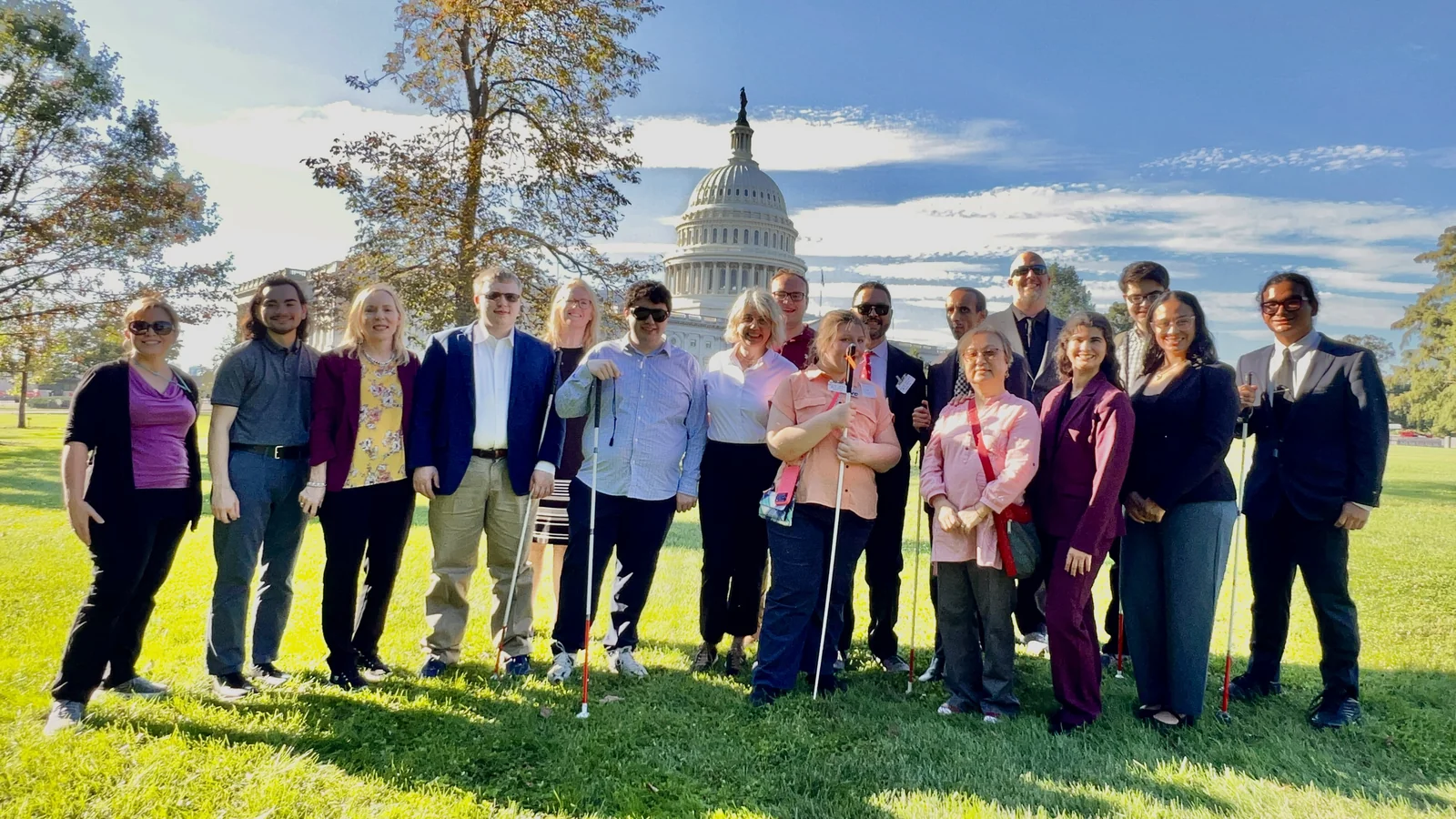
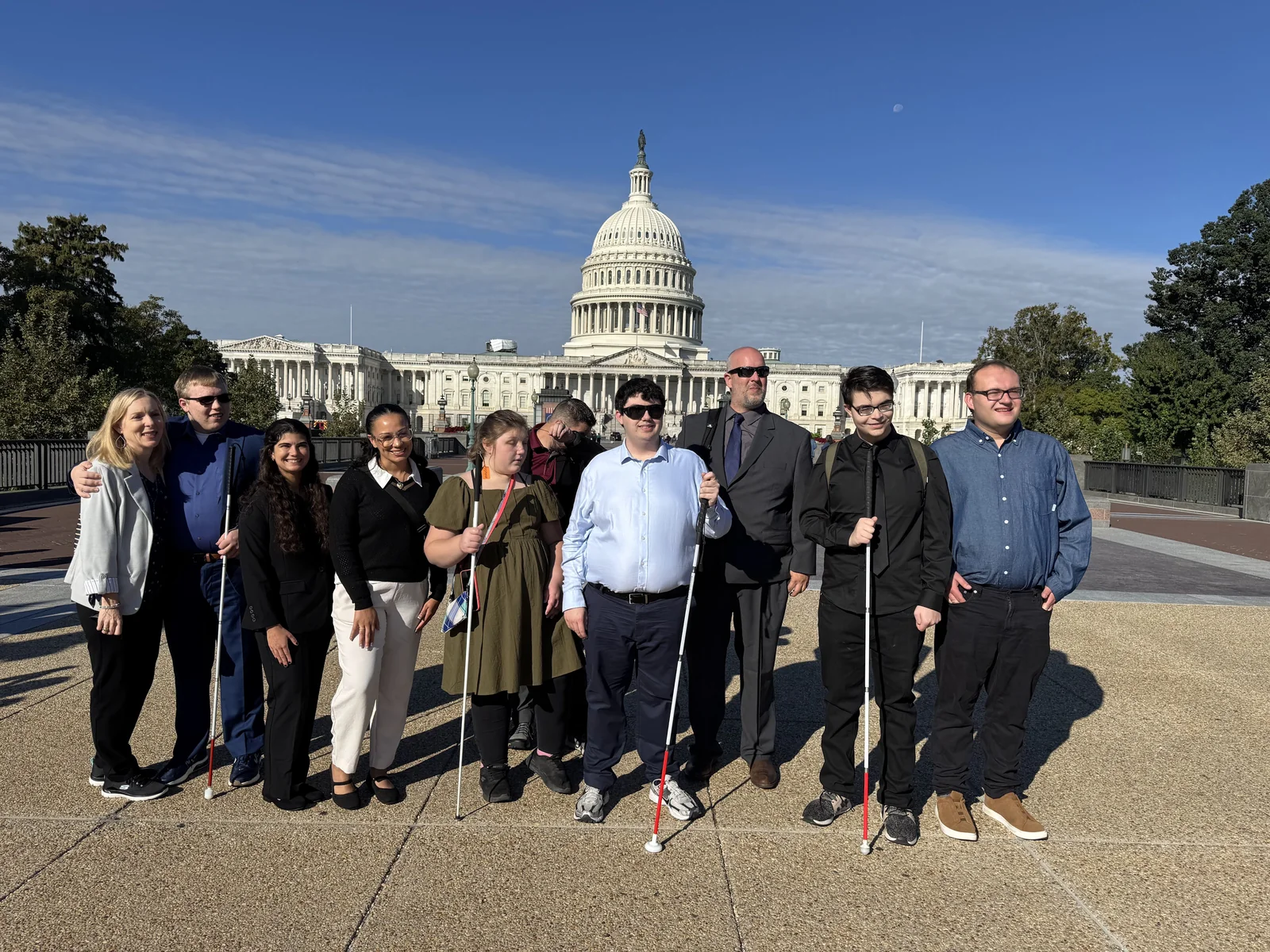
The advocacy group stands on the Capitol lawn beneath a blue sky.
Together on Capitol Hill
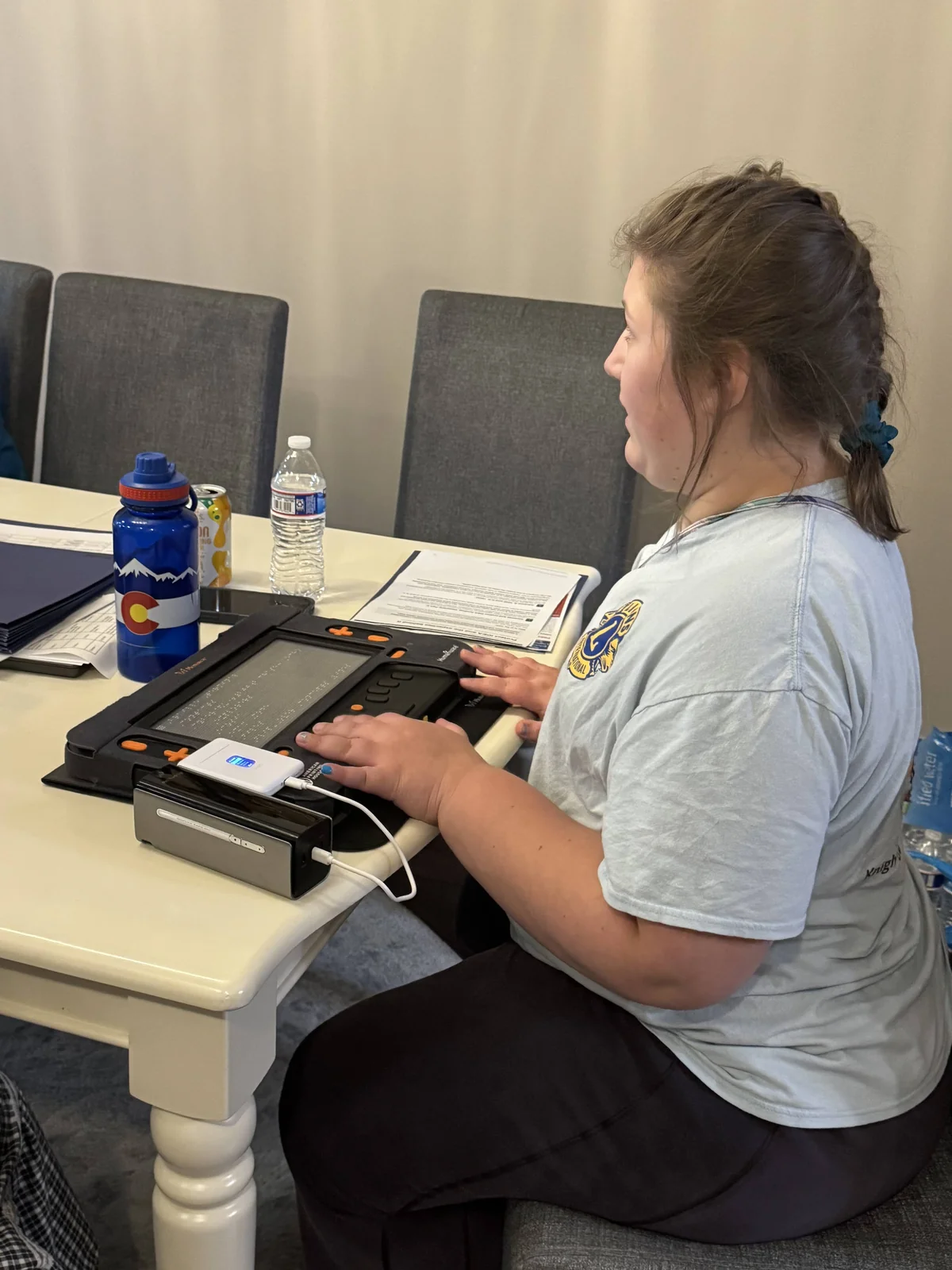
Isabelle sits at a table with a laptop and Braille device.
Preparing for the days ahead
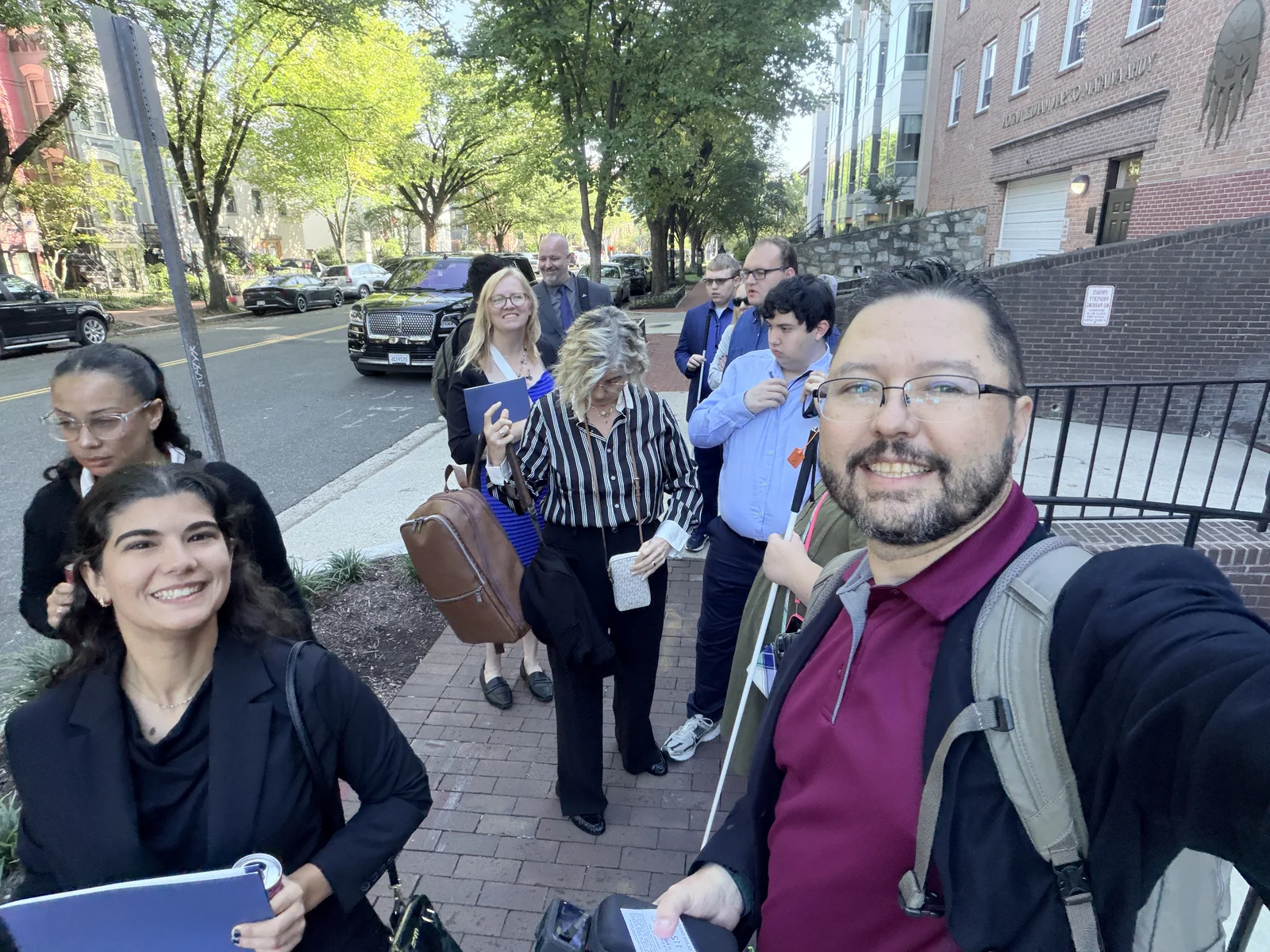
Rob takes a group selfie on a tree-lined Washington sidewalk.
On the way through Washington
Members of the group gather in front of the U.S. Capitol.
At the U.S. Capitol
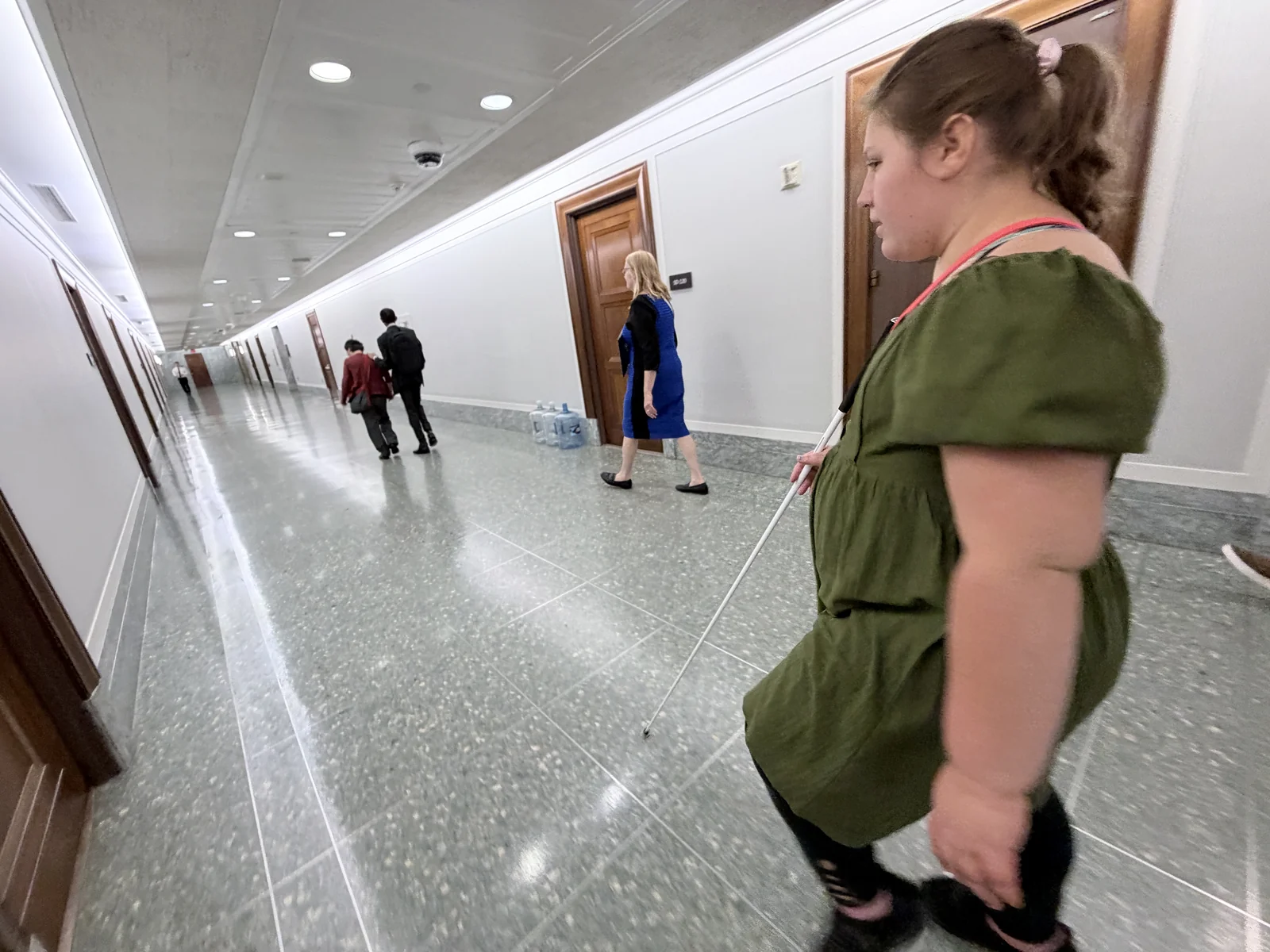
Isabelle, wearing a green dress, travels along a wide corridor with her white cane.
Moving through the Capitol
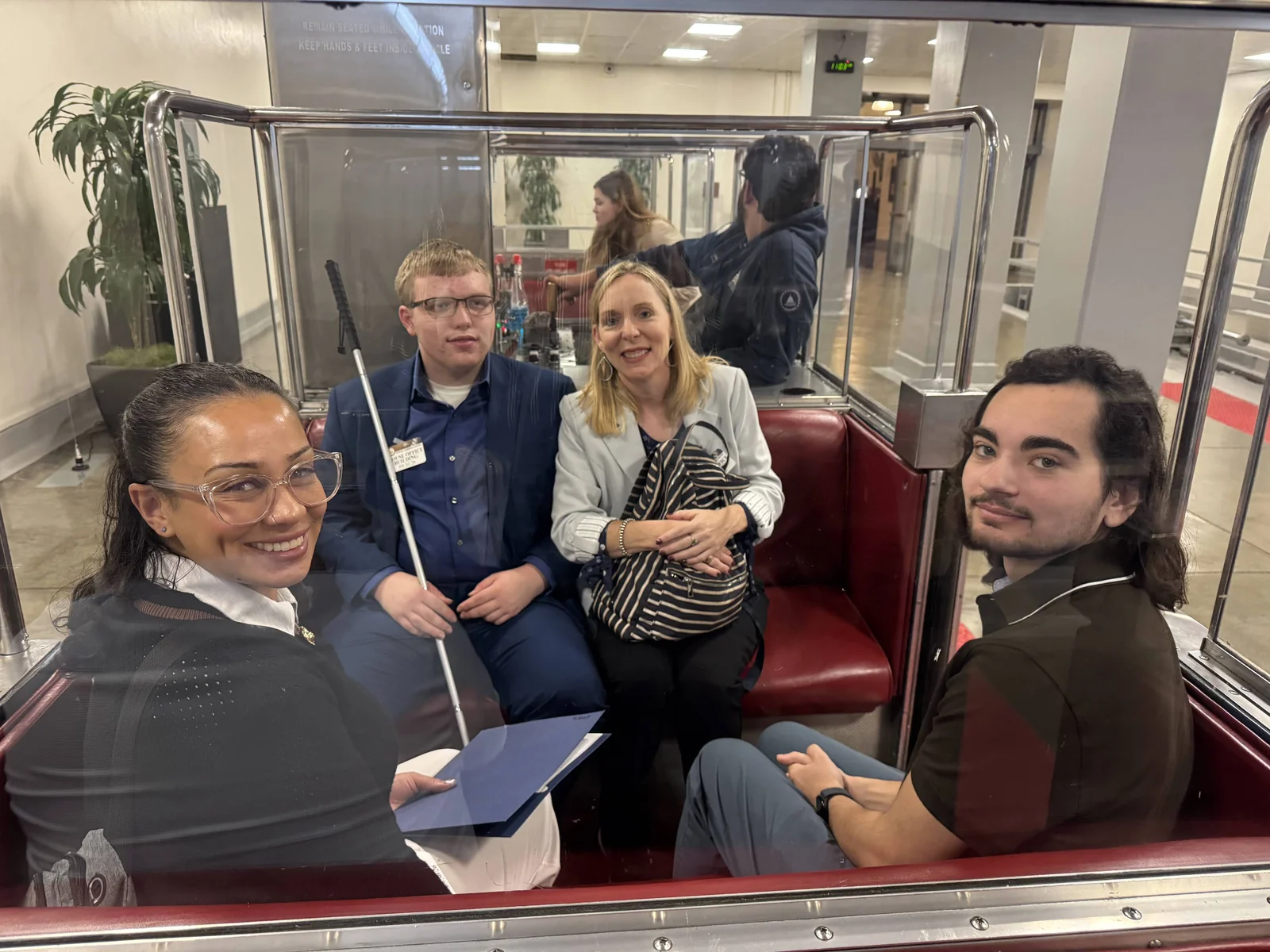
Four members of the group sit together in a Capitol subway car.
Traveling between buildings
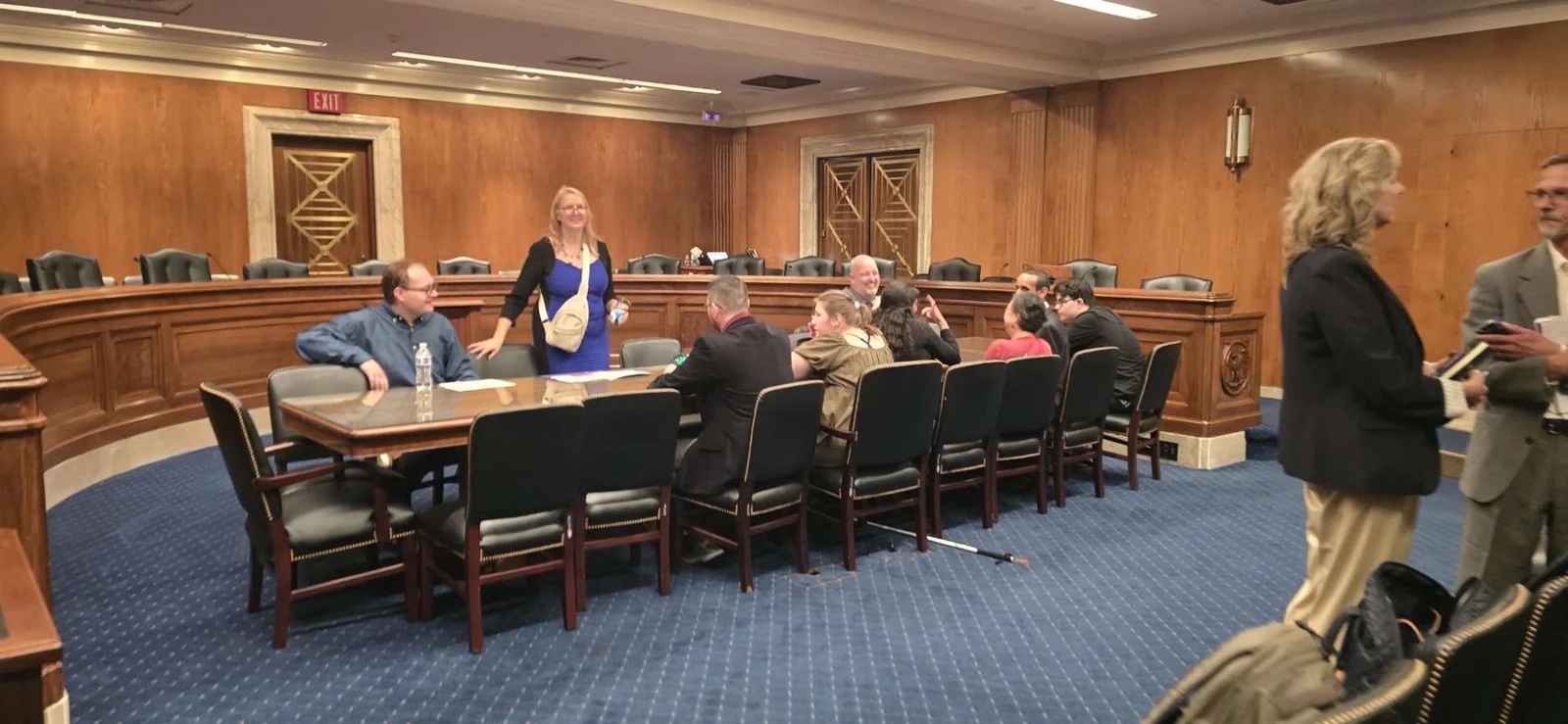
The group gathers around tables in a wood-paneled hearing room.
Inside a hearing room
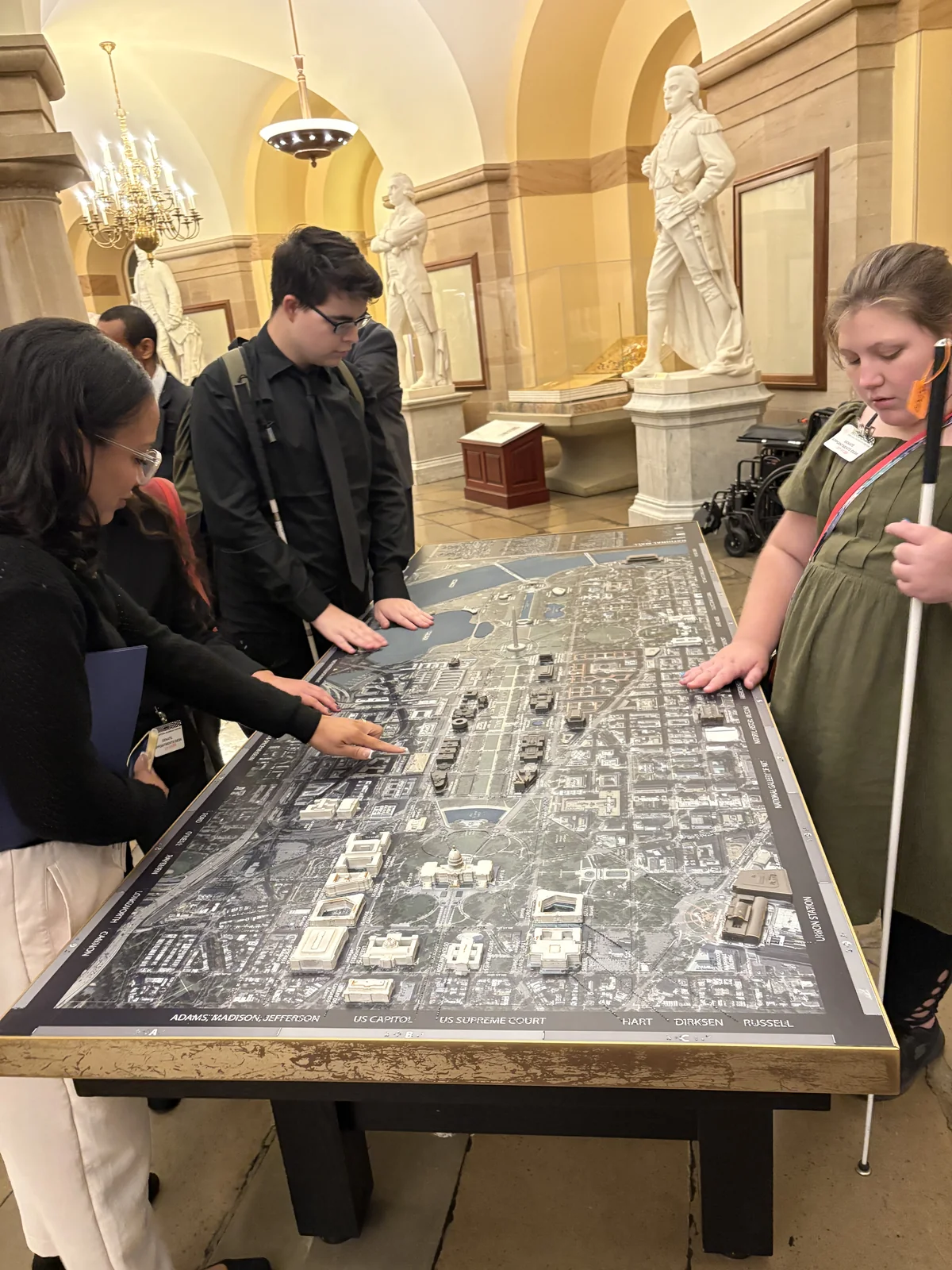
Isabelle and two other visitors explore a raised map in a marble hall.
Exploring a tactile map
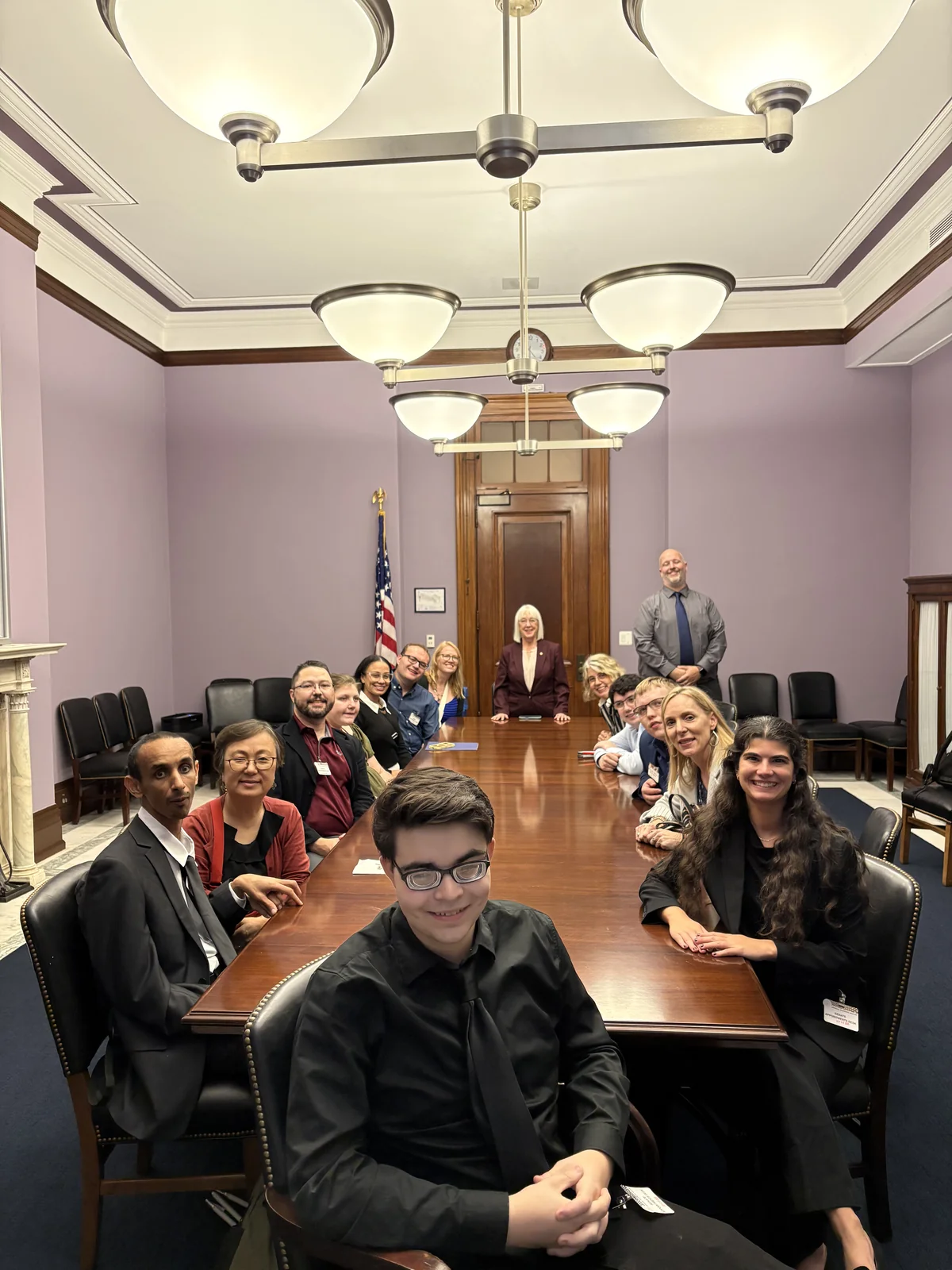
The group sits around a long conference table, with Rob nearest the camera.
Around the table
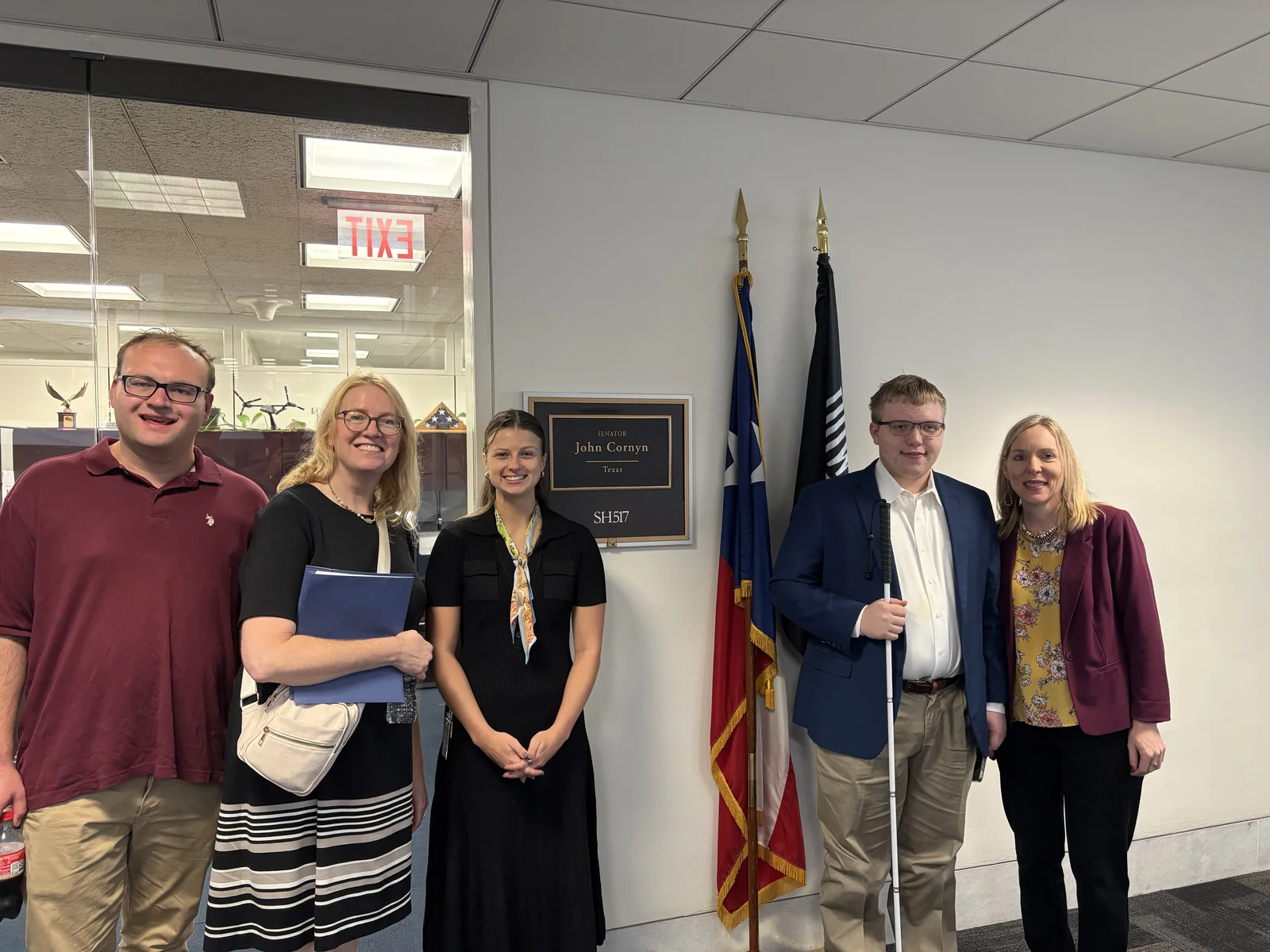
Five members of the group pose beside an office entrance and flags.
A stop on Capitol Hill
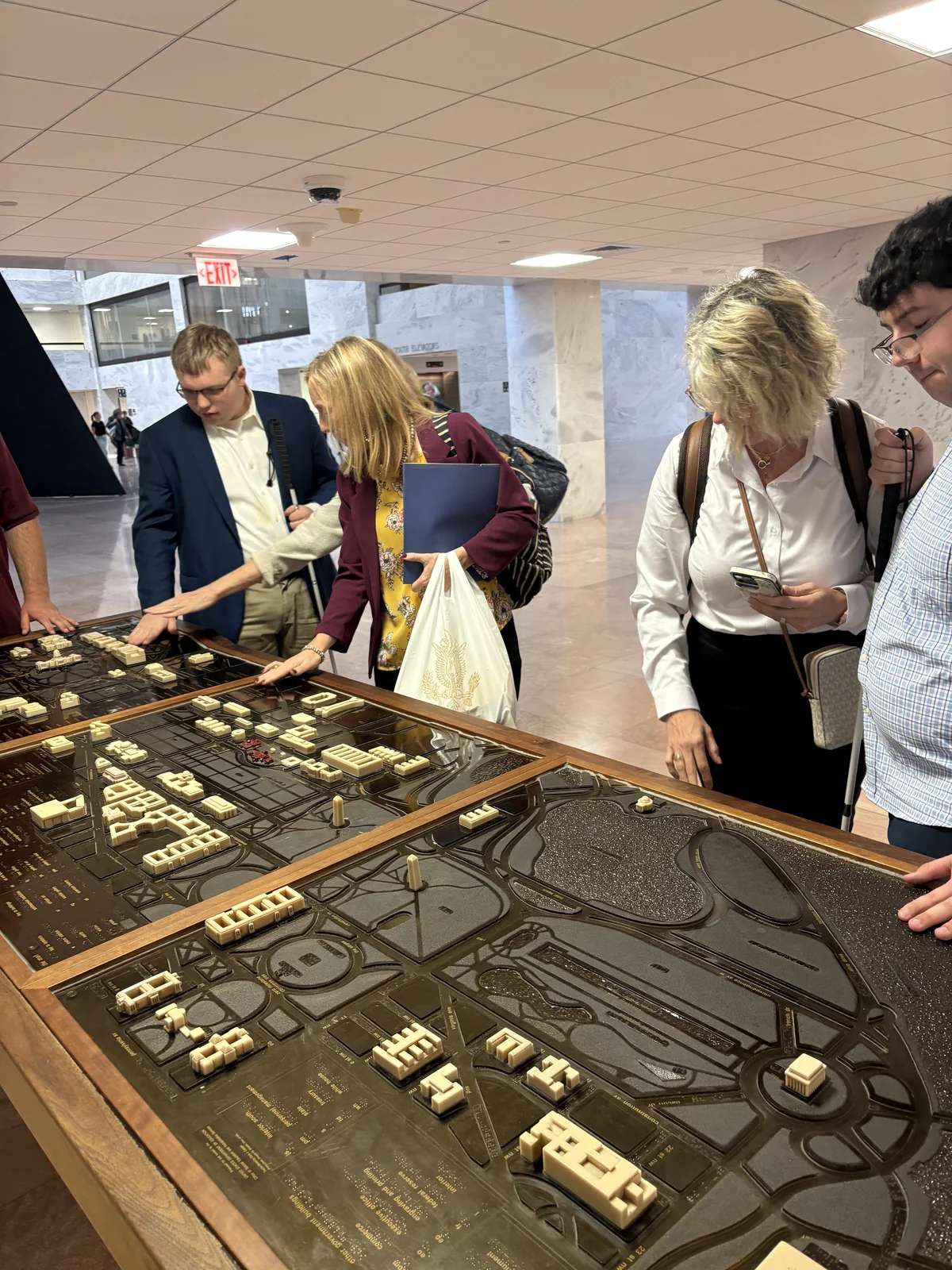
Visitors explore the details of a large tactile building model.
Access through touch
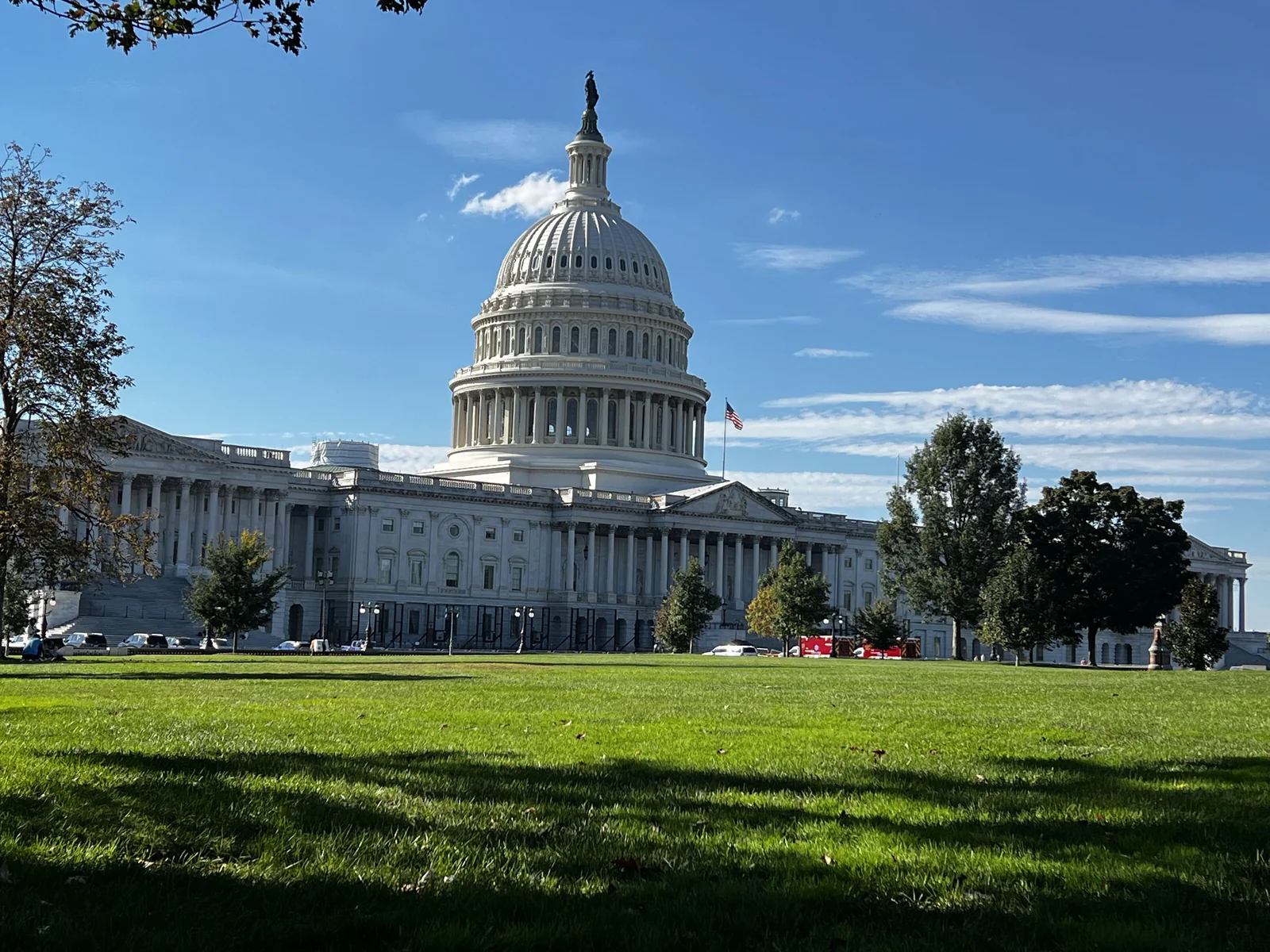
Sunlight falls across the U.S. Capitol and the green lawn in front of it.
A view of the Capitol
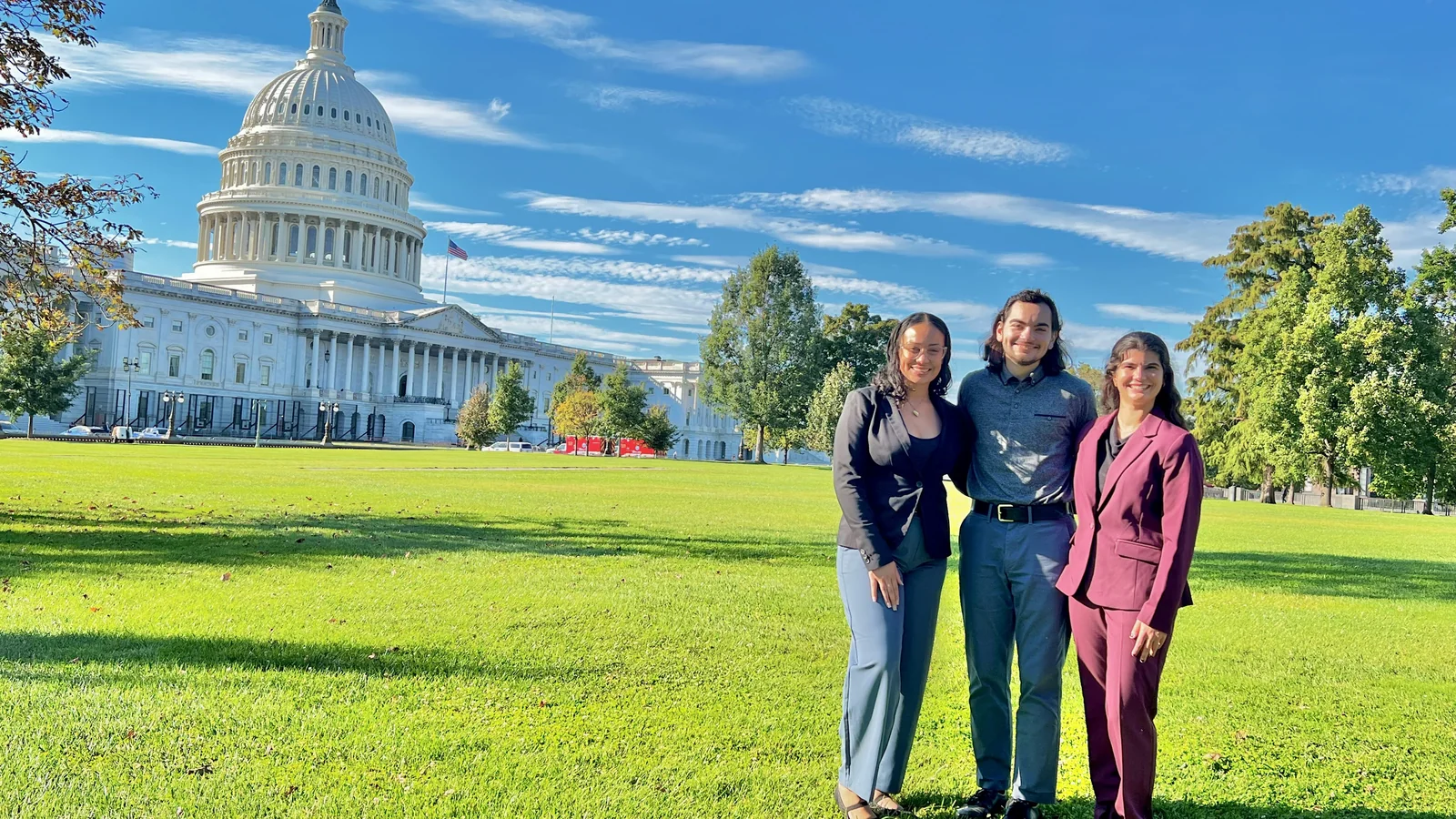
Three members of the group stand together with the Capitol behind them.
A moment on the lawn
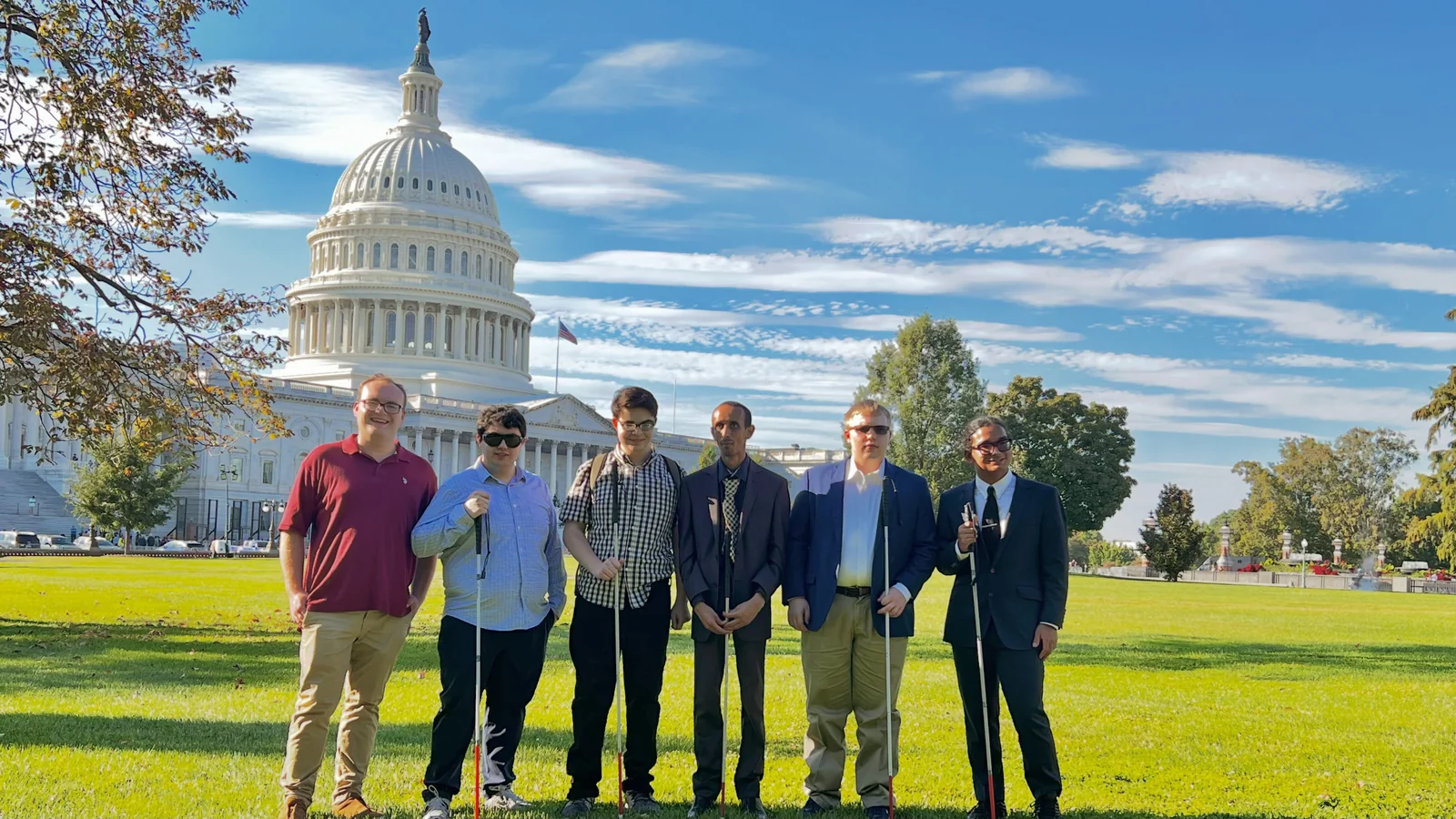
Six members of the group pose together on the Capitol lawn.
Connections on Capitol Hill
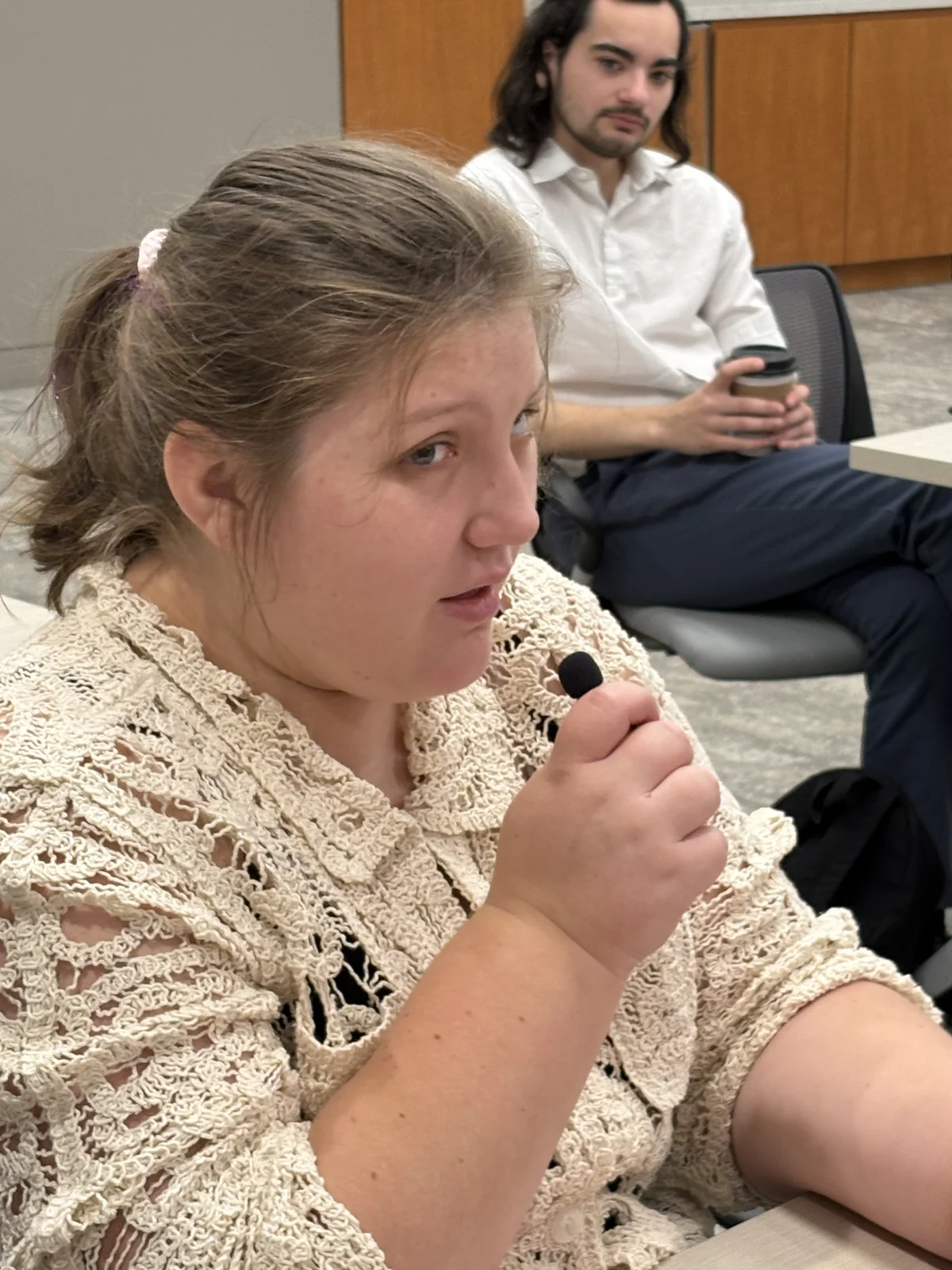
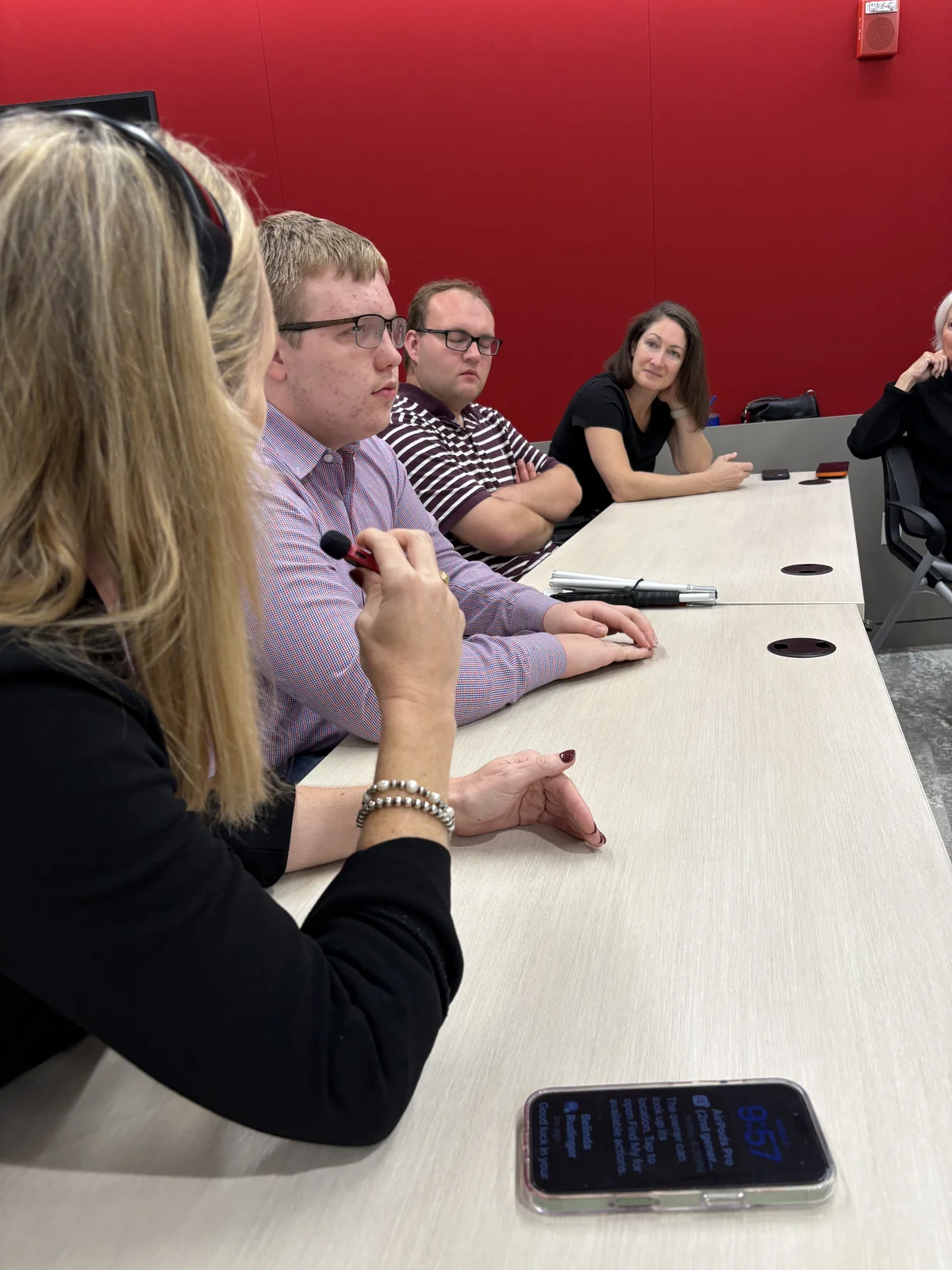
Isabelle holds a microphone while seated at a meeting table.
Isabelle at the microphone
Participants sit around a conference table as a man holds a microphone.
Time for conversation
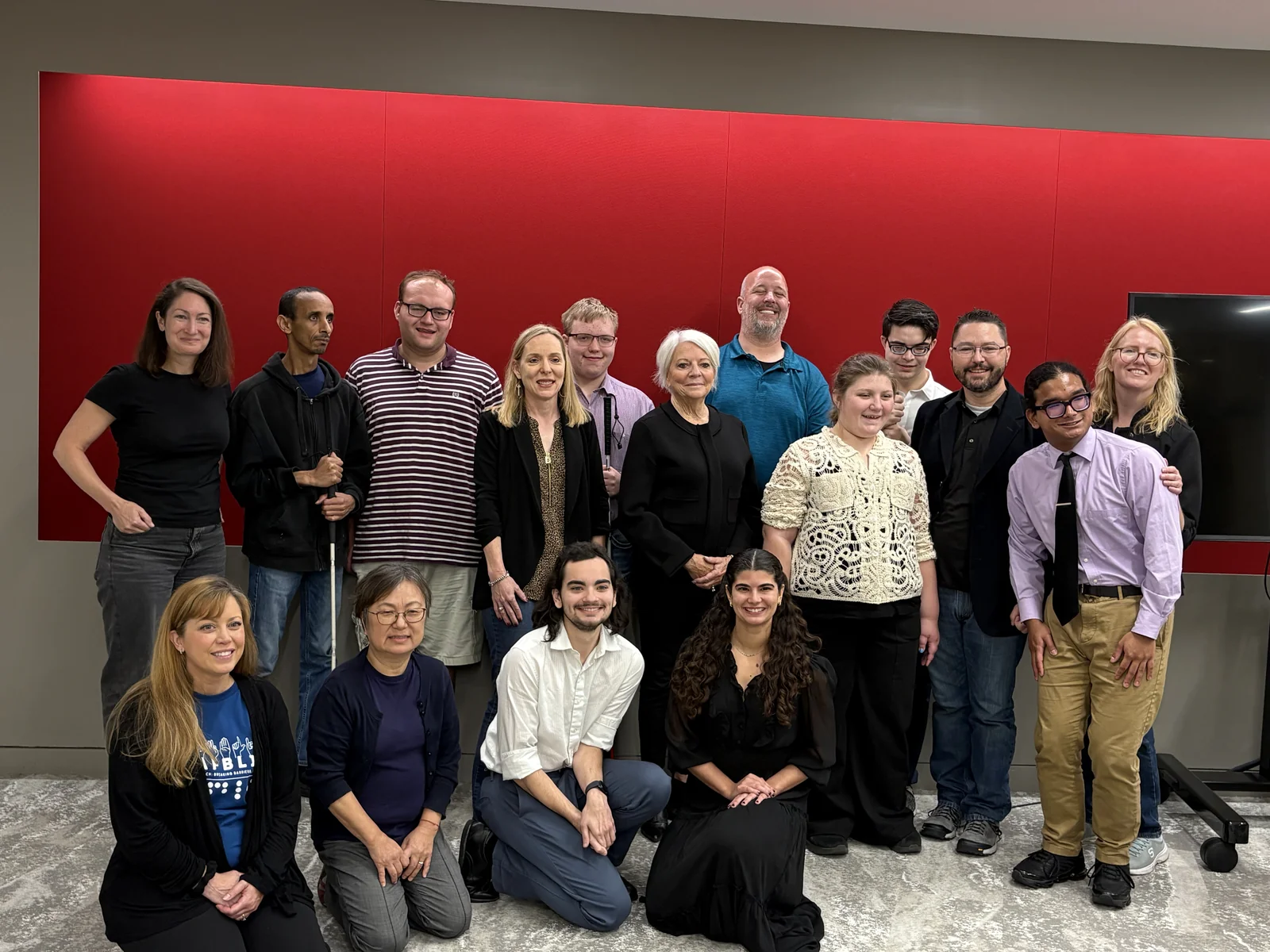
The group poses for a photo in a room with a red wall.
Gathered together
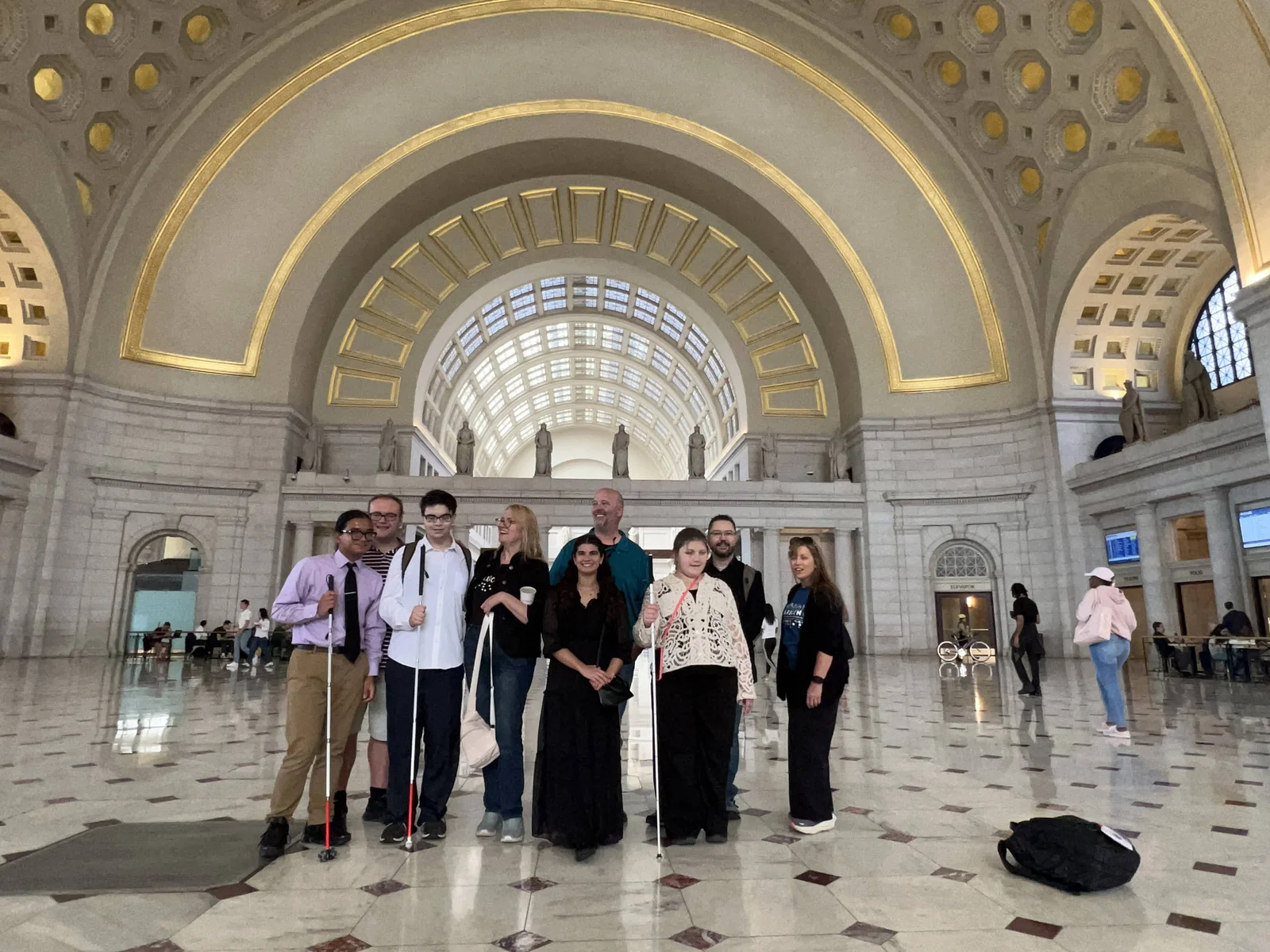
Members of the group stand beneath the tall arches of Union Station.
A stop at Union Station
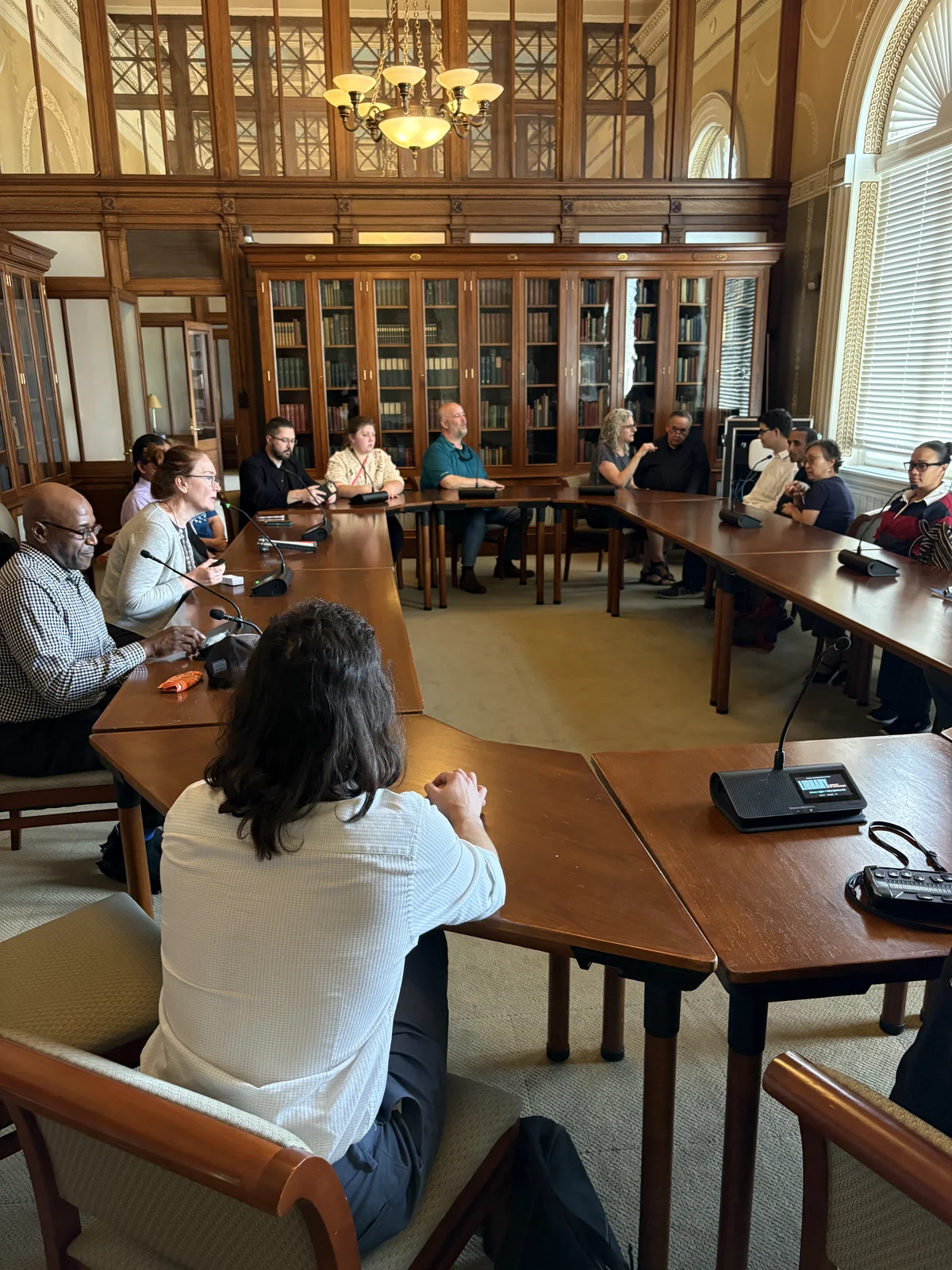
The group gathers around a long table in an ornate Library of Congress room.
Inside the Library of Congress
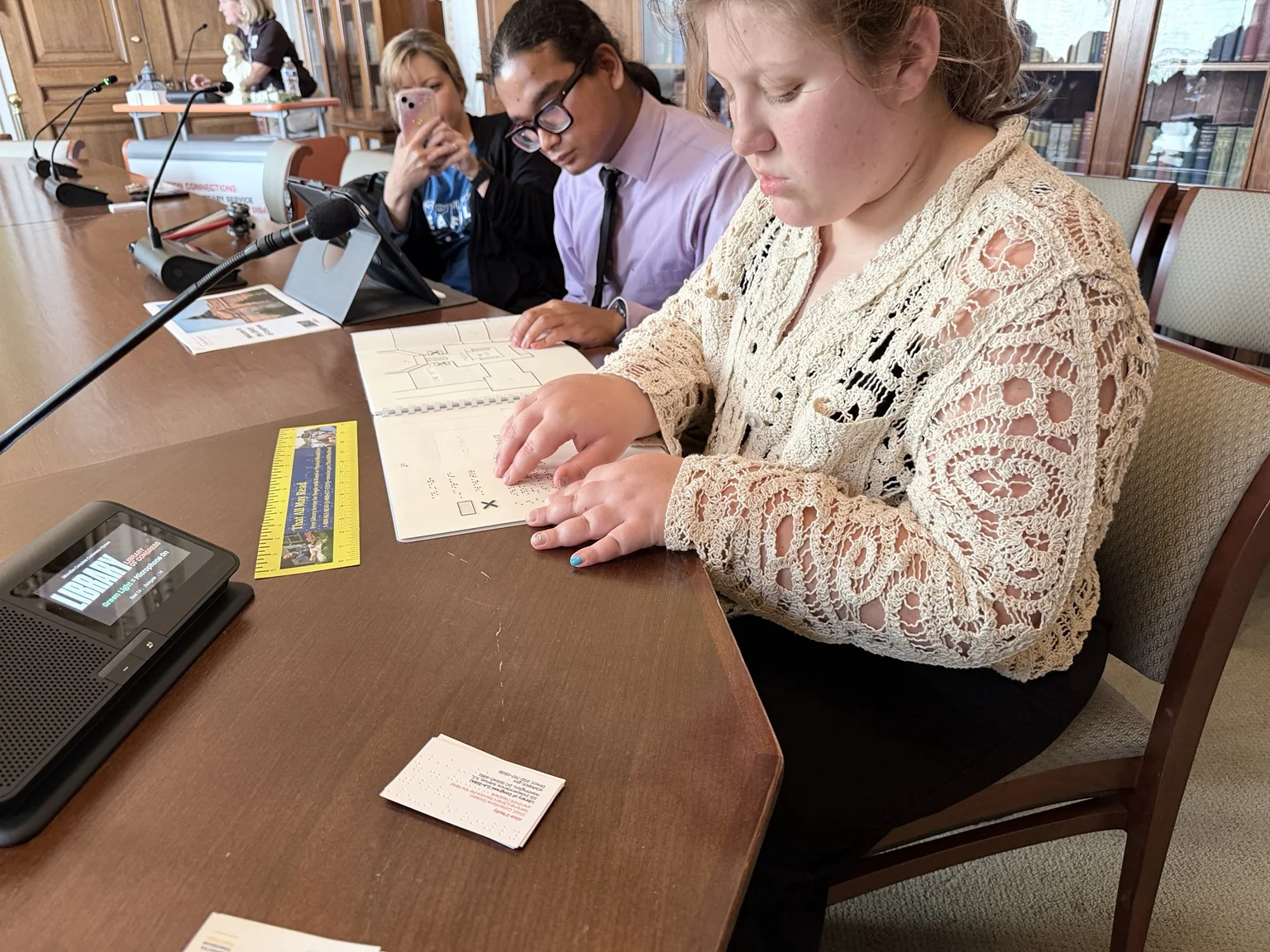
Isabelle explores a Braille and tactile guide at a Library of Congress table.
Braille and tactile access

Stories behind the work

These are not abstractions. They are what got us here.

Two featured stories helped shape our Washington advocacy: a full-circle connection that began with a conversation about parent experience, and a braille STEM investment that became evidence when a family needed it.

Featured story · Depth

From a Conversation in Colorado to Washington

A conversation about parent experience years ago in Colorado became part of a longer path into research, family advocacy, and systems change. That path now connects to federal education advocacy in Washington—with Isabelle participating as a blind young-adult self-advocate.

Read the Full Circle story

Featured story · Evidence

When the Work Comes Back Around

Project INSPIRE’s braille STEM work helped Isabelle’s education and gave Rob evidence when advocacy alone wasn’t enough. That family story informs the federal advocacy work.

Read Project INSPIRE

Why this work matters

Policy needs the truth only lived experience can carry.

Washington, D.C. advocacyFall 2026 · Trip completed

This federal agenda connects family experience and rural access with the decisions that shape education policy. The focus remains two issues and two asks.

The public agenda is intentionally narrow: two issues and two asks. Travel plans, meeting schedules, participant information, and how individual conversations were arranged will remain private unless the people involved choose to make them public.

The Congressional agenda

Two issues. Two asks.

The broader work provides evidence. These are the two federal actions Rob and Isabelle are asking Congress to take.

  1. Protect the entire Individuals with Disabilities Education Act—including Part D

    Protect funding for every part of the Individuals with Disabilities Education Act (IDEA) in final fiscal year 2027 appropriations. Preserve Part D national activities that sustain personnel preparation, technical assistance, parent training and family information, accessible technology and materials, and specialized expertise. Part B helps schools provide services; Part D helps build the people, knowledge, and capacity needed to provide them well.

  2. Support and advance Senate bill 5046

    Keep the Office of Special Education and Rehabilitative Services (OSERS) and other core education functions within the U.S. Department of Education. Monitoring of the federal special education law, technical assistance, coordination, and specialized expertise should remain connected to the broader education system—not fragmented or moved into a medical-services frame.

    Read Senate bill 5046 (S.5046) on Congress.gov

The AdvocateDadCO foundation

Three commitments guide the broader work.

These are AdvocateDadCO’s permanent systems-change priorities. They shape work in Colorado and nationally, but they are not three additional Congressional asks for this D.C. delegation.

  1. Deliver access from day one

    Make timely Braille, accessible instructional materials, assistive technology, orientation and mobility (O&M), and Expanded Core Curriculum instruction an expectation—not an exception families must repeatedly fight to obtain.

  2. Build and support the workforce

    Strengthen the pipeline of teachers of students with visual impairments (TVIs), certified orientation and mobility specialists (COMS), interveners, and related professionals, with specific solutions for rural communities where distance and shortages compound inequity.

  3. Share power with the people affected

    Include disabled people and families meaningfully in policy design, implementation, evaluation, and oversight—not only after decisions have already been made.

Follow the public work

Follow public updates.

Receive advocacy updates, practical resources, and ways to take action.

Receive advocacy updates

Support or share

Take the briefing with you

One-page advocacy briefing

A concise printable summary of who Rob and Isabelle are, why low-incidence federal infrastructure matters, and the two Congressional asks. The same information is available in HTML on this page.

Download the PDF